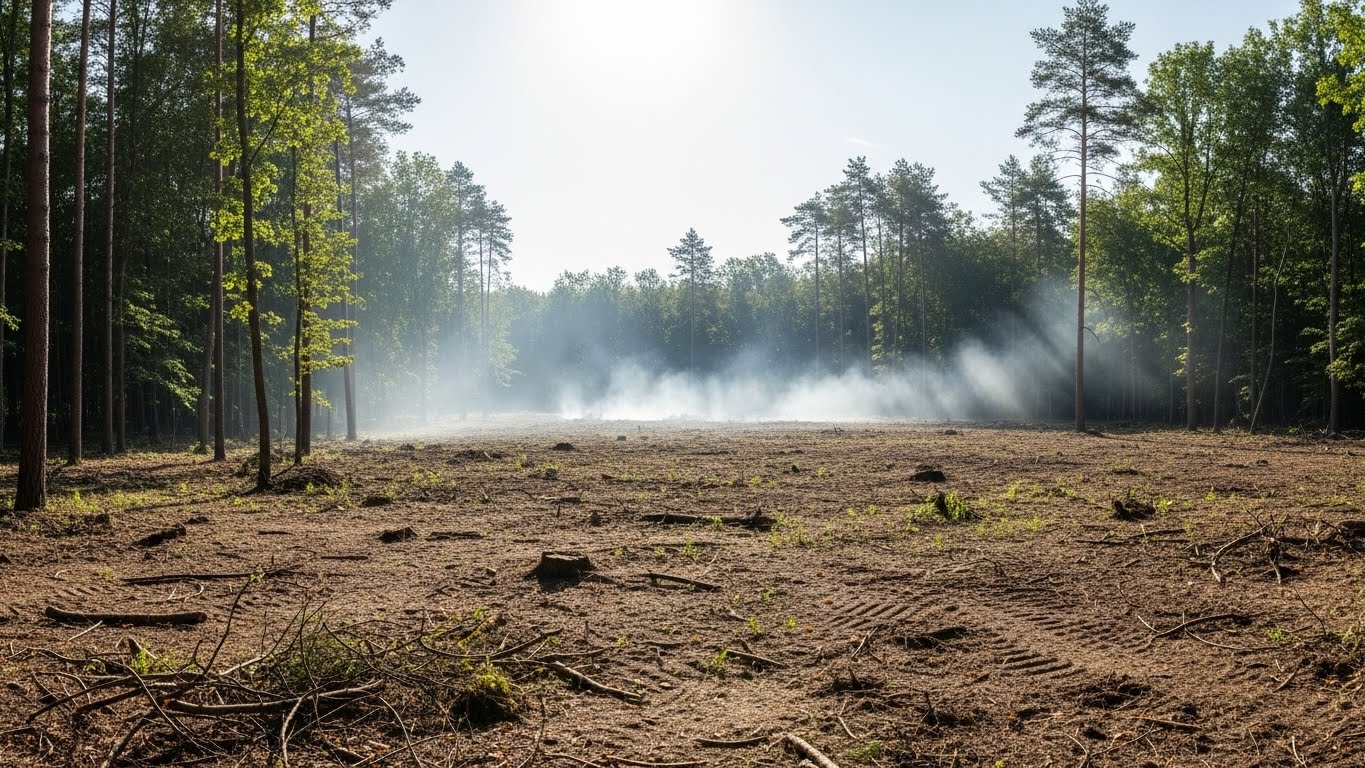
When a wall of flame crests a ridge and the sky turns orange at noon, the world shrinks to a single fact: fire is here. The wildfires of the past decade have announced themselves with images that sear into memory — the orange skies of California, the apocalyptic smoke that turned New York orange in 2023, the firestorms that consumed towns in Greece and Portugal and Australia, the vast boreal burns of Canada and Siberia. Wildfire has always been a natural part of many ecosystems, clearing dead wood and renewing forests. But the fires of recent years are not the fires of the past. They are larger, hotter, faster, and more destructive, and they are arriving in places that never expected them.
The connection between climate change and wildfire is among the most direct and best documented in climate science. Fire needs three things: fuel, oxygen, and ignition. Climate change is loading the first and priming the landscape for combustion. Heat dries the vegetation; drought turns forests and grasslands into tinder; and the longer, hotter fire seasons extend the window in which fires can ignite and spread. The Intergovernmental Panel on Climate Change and a large body of research have concluded that climate change is increasing the frequency and intensity of the fire weather that drives the largest and most destructive fires. This article explores the science of fire, the climate connection, the costs of the burning, and how humanity can learn to live with fire.
The Science of Fire Weather
Fire is a physical reaction — fuel, heat, and oxygen combining in a self-sustaining chain. What determines whether a landscape burns is not just the presence of ignition but the condition of the fuel. Fuel must be dry enough to ignite and dense enough to sustain a flame. This is where climate does its work. When temperatures are high and humidity is low, vegetation loses moisture and becomes flammable. When drought persists, the drying extends deep into soils, tree canopies, and the coarse woody debris of the forest floor. The meteorological conditions that produce dangerous fire — hot, dry, windy weather — are called fire weather, and fire weather indices are used around the world to measure the risk. The defining feature of the climate-fire connection is that warming is making fire weather more frequent, more intense, and more widespread.
Heat, Drought, and the Thirsty Air
The mechanism is evaporation. A warmer atmosphere holds more moisture and pulls more water out of plants and soils — a process called vapor pressure deficit. The higher the vapor pressure deficit, the faster vegetation dries, and the more combustible the landscape becomes. This is why heatwaves and droughts so often precede catastrophic fires: they are the climate priming the fuel. Studies of the world's major fire regions — the western United States, the Mediterranean, Australia, the Amazon, and the boreal forests — consistently find that warming-driven drying has lengthened fire seasons, increased the area burned, and raised the intensity of the worst fires.
The Changing Fire Regime
Not all fire is bad. Many ecosystems evolved with fire, and low-intensity burns clear dead fuel and recycle nutrients. The problem is the change in the fire regime — the shift from frequent, low-intensity fires to less frequent but catastrophic firestorms. Several factors are driving this shift. Climate change extends the dry season and increases fire weather, as described above. Land management history has accumulated fuel: a century of aggressive fire suppression in the western United States removed the natural low-intensity burns that kept fuel loads low, leaving dense, fire-prone forests. And human expansion into fire-prone landscapes puts more homes, lives, and infrastructure in the path of the flames. The megafires of recent years — fires that burn at intensities beyond anything historical records show — are the product of all three.
The Fires That Can't Be Fought
The most frightening development is the emergence of fires that burn with such intensity that they cannot be directly fought. These firestorms create their own weather — fire-generated thunderstorms, fire tornadoes, and ember storms that shower burning debris kilometres downwind. The 2019–20 Australian bushfires and the 2020 California fires burned at this scale, and firefighters could only try to defend lives and structures while the fires ran their course. When fire reaches this intensity, the strategy shifts from suppression to evacuation, and the outcome depends on the warnings and preparation that happen before the fire arrives.
The Costs of the Burning
The human and economic costs of megafires are staggering. Lives are lost — the California fires of 2018, the Australian fires of 2019–20, and the Maui fire of 2023 each claimed scores of lives. Homes are destroyed by the tens of thousands, and communities are wiped off the map. The economic cost runs into the hundreds of billions: property losses, firefighting budgets, health care for smoke exposure, and the collapse of tourism and insurance. The 2023 Canadian fire season, the worst on record, burned an area larger than the entire country of Greece and sent smoke that degraded air quality across much of North America and Europe. And the health effects of wildfire smoke — which carries fine particles deep into the lungs — are increasingly recognized as a major public health burden, with studies linking smoke exposure to respiratory and cardiovascular harm and even premature death.
The Ecological and Climate Feedback
Fire also feeds back on the climate. Forests are carbon stores, and when they burn, their carbon is released to the atmosphere. The boreal forests of Canada and Siberia, which hold enormous carbon reserves in their trees and peat soils, are increasingly burning, and some research suggests the boreal region may be shifting from a carbon sink to a carbon source as fires and drought accelerate. Fires also destroy the very ecosystems that would absorb carbon in the future, and repeated burns can convert forests to grasslands or shrublands that store far less carbon. The fires that climate change intensifies are themselves accelerating climate change — a feedback loop that makes the warming worse.
Wildfire at a Glance
~400 million: Hectares burned globally in a bad fire year
2x: How much the area burned in western US wildfires has grown since the 1980s
Fire weather: Hot, dry, windy conditions that drive the most destructive fires
2019–20: The Australian bushfire season that killed billions of animals and 30+ people
Boreal: The northern forests that are increasingly burning and releasing carbon
Living with Fire
The era of fire suppression as a solution has ended; the era of living with fire has begun. The response to the wildfire crisis has several pillars, and none is sufficient alone.
Prevention and Fuel Management
Reducing the fuel that fires burn is the most direct lever. Prescribed burns — deliberately setting controlled, low-intensity fires — clear accumulated fuel and restore the natural fire regime that ecosystems evolved with. Mechanical thinning and fuel breaks reduce the continuity of flammable vegetation. The practice is culturally ancient — Indigenous peoples across the Americas, Australia, and Africa used controlled burning for millennia — and it is being revived as fire science recognizes its wisdom. Land management that restores these practices is one of the most effective ways to reduce the risk of catastrophic fire.
Community Defense and Warning
In fire-prone landscapes, the protection of people begins before the fire. Building codes that require fire-resistant materials, defensible space around homes, and evacuation planning save lives and structures. Early warning systems and the authority to evacuate — decisions that have historically been left too late — are essential. And the emergency response must be resourced and coordinated, with the capacity to move people out of harm's way before the fire arrives rather than after.
Reducing the Drivers
Beneath the immediate response lies the climate connection itself. Fire weather is driven by warming, and warming is driven by emissions. Every reduction in emissions reduces the fire weather of the future — the frequency of the hottest, driest, windiest days on which megafires ignite. Adaptation can reduce the damage fires cause; only mitigation can reduce the fire itself. The wildfire crisis is a climate crisis, and it will not be solved by firefighting alone.
Conclusion: The Season of Smoke
The fires of recent years have changed how the world thinks about climate change. They are not abstract statistics or distant projections; they are orange skies, choking smoke, and the smell of burning forests that travels across continents. The connection is now undeniable: a warmer world is a thirstier world, and a thirstier world is a world that burns. The response must be equally real — prepared communities, restored land management, and the emissions cuts that stop the warming from making the fires worse. Fire has always been a force of nature, but the firestorms of the climate era are a force of our own making, and they will grow until the world acts on both the fuel and the flame. The season of smoke has begun; it is ours to shorten.
Frequently Asked Questions
How does climate change affect wildfires?
Climate change increases fire weather — hot, dry, windy conditions — by warming the atmosphere, which dries vegetation faster and extends the fire season. This makes large, intense, and destructive fires more frequent and widespread.
Why are fires getting bigger and more destructive?
Beyond climate change, a century of fire suppression has accumulated fuel, and human expansion has put more homes in fire-prone landscapes. The result is a shift from frequent low-intensity fires to rarer but catastrophic firestorms that cannot always be fought.
Is all wildfire bad?
No. Many ecosystems evolved with fire, and low-intensity fires clear fuel and renew forests. The problem is the change in the fire regime — the shift to megafires that burn at intensities beyond historical experience and destroy homes, lives, and ecosystems.
What are the health effects of wildfire smoke?
Wildfire smoke contains fine particles that penetrate deep into the lungs and bloodstream, causing respiratory and cardiovascular harm. Studies link smoke exposure to worsened asthma, heart disease, and premature death, and the 2023 Canadian fires showed smoke can travel across continents.
How can communities live with wildfire?
Through fuel management like prescribed burns, fire-resistant building codes, defensible space, early warning and evacuation systems, and reducing the emissions that drive fire weather. Adaptation reduces fire damage; mitigation reduces fire itself.
Related Articles
Extreme Weather: How Climate Change Is Supercharging Storms, Floods, and Wildfires — The broader pattern of intensifying extremes, of which wildfire is one face.
Drought and Water Scarcity: The Drying of a Warming World — The drought that primes the landscape for fire.
Permafrost Thaw: The Arctic's Dangerous Feedback — The northern fires that are releasing carbon stored for millennia.