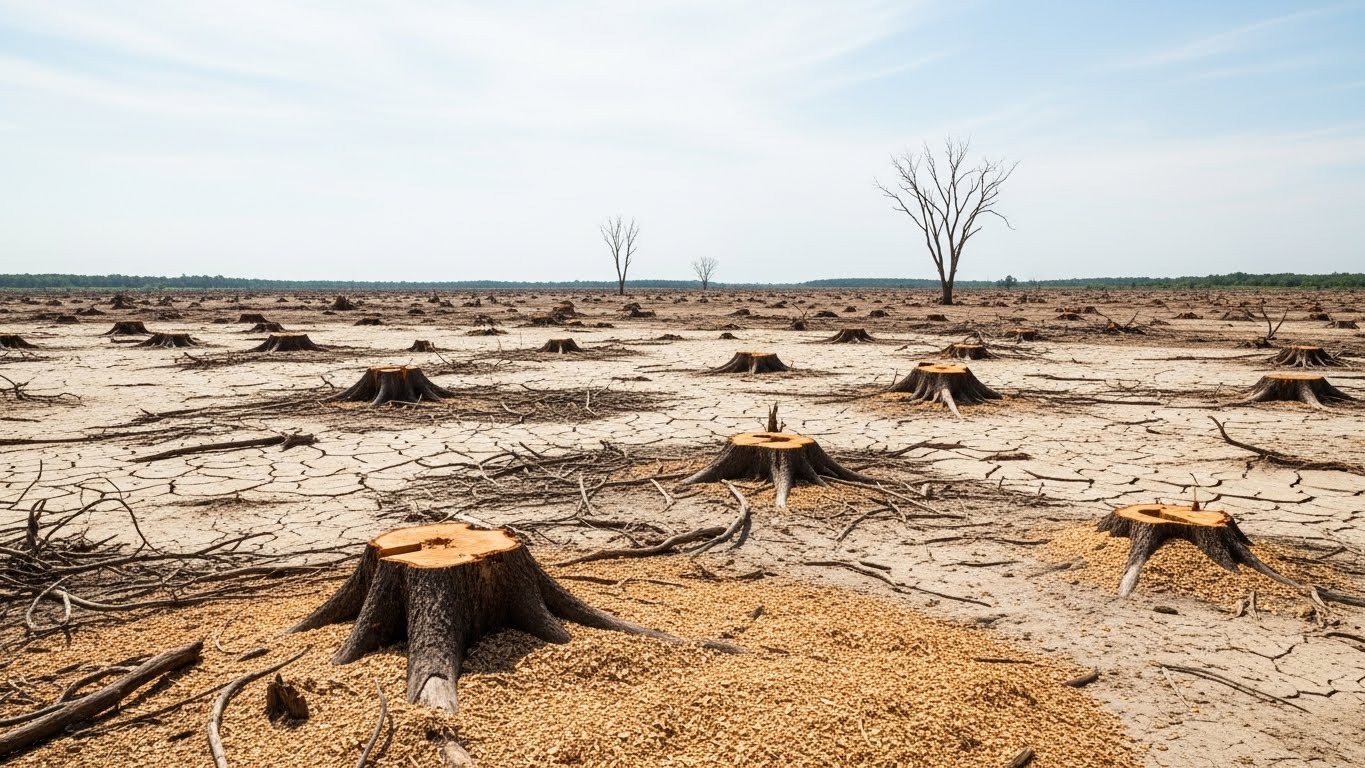
Look at the ground beneath your feet, and you are looking at one of the largest carbon warehouses on Earth. The world's soils hold more carbon than the atmosphere and more than all the world's vegetation combined — an estimated 1,500 to 2,500 billion tonnes of carbon, roughly twice as much as the atmosphere and three times as much as all the trees and plants. This carbon is the remains of countless generations of plants and organisms, accumulated over millennia and stored in the dark, living matrix of the soil. And it is being depleted. The way humanity has farmed the land over the past century — ploughing, overgrazing, draining, and leaving soil bare — has released a large share of this stored carbon to the atmosphere, turning a great carbon warehouse into a source of emissions.
The good news is that the flow can be reversed. Soils are not just a store that can be emptied; they are a living system that can be built. Through the practices grouped under the terms regenerative agriculture, carbon farming, and soil stewardship, farmers can put carbon back into the ground — increasing soil organic matter, improving fertility and water retention, and drawing down atmospheric carbon in the process. The potential of soils to absorb carbon is significant, and the co-benefits — healthier food, more resilient farms, cleaner water — are immense. This article explores the role of soils in the carbon cycle, how agriculture has depleted them, and how regenerating the soil can be one of the most powerful and practical climate solutions available.
The Carbon in the Ground
Soil carbon exists in two main forms. Soil organic matter is the living and once-living material — plant roots, microbes, fungi, and decomposing organisms — that gives soil its dark colour and its fertility. Inorganic carbon, in the form of carbonates, is also present, particularly in arid soils. The organic matter is the active, dynamic component: it cycles carbon through the soil as plants grow, die, and decompose, and it is the form that agriculture can most directly influence. A healthy soil with high organic matter is a sponge for carbon and water, teeming with the life that makes land productive.
The Historical Loss
Human agriculture has been a story of soil carbon loss. When natural grasslands and forests are converted to cropland, the soil is tilled, exposing its organic matter to oxygen and accelerating decomposition; the soil carbon is released as carbon dioxide. Historically, it is estimated that agricultural land has lost anywhere from a quarter to half of its original soil carbon, with the deepest losses in the soils most intensively farmed. The release of soil carbon from land-use change — deforestation, ploughing, and drainage — has contributed significantly to the carbon dioxide in the atmosphere, and it continues today in the tropics, where land is still being cleared. The carbon that took centuries to accumulate in the soil has been released in decades.
How Farming Depletes the Soil
The practices of industrial agriculture are, in large part, the practices of soil carbon loss. Ploughing, or tillage, is the most direct culprit: it turns the soil, exposing organic matter to the air and accelerating its decomposition, and it destroys the soil structure that holds carbon. Leaving soil bare between harvests and planting leaves it exposed to erosion, which carries away the carbon-rich topsoil. Overgrazing strips the vegetation that feeds the soil, and the application of nitrogen fertilizers, while boosting yields, can deplete soil organic matter and emit nitrous oxide. The drainage of wetlands and the over-extraction of water compound the damage. The result is a farming system that produces food while emptying the carbon warehouse beneath it — a system that is productive in the short term and self-defeating in the long.
The Regenerative Turnaround
Regenerative agriculture is the set of practices that reverse the soil's decline and rebuild its carbon. The practices are grounded in a simple principle: keep the soil covered, keep it undisturbed, and keep living roots in it as much of the year as possible.
The Core Practices
The central practice is no-till or reduced-till farming, which leaves the soil undisturbed and its organic matter intact. Cover cropping — planting crops between cash crops to keep the soil covered and roots in the ground year-round — adds organic matter and prevents erosion. Crop rotation and diversity, which alternate crops and include legumes that fix nitrogen, build soil health and reduce the need for synthetic fertilizer. Composting and the application of organic amendments add carbon directly. And agroforestry and integrated livestock management, which incorporate trees and animals into farming systems, build soil carbon and diversify the farm. Each practice is well established; the regenerative approach is their integration into a system that treats soil health as the foundation of productivity.
The Carbon Potential
The potential of these practices to sequester carbon is significant, though it must be stated honestly. Estimates vary, but the global potential for soil carbon sequestration through improved management is on the order of a few billion tonnes of carbon per year — enough to make a meaningful contribution to climate goals, though not enough to offset the fossil emissions that remain the core of the problem. The permanence of the storage also varies: soil carbon can be released again if the practices are abandoned, so the storage is durable only while the practices are maintained. The honest framing is that soil carbon is a valuable and necessary complement to emissions cuts, not a substitute for them — but the co-benefits make it worthwhile regardless.
Soil Carbon at a Glance
1,500–2,500 billion: Tonnes of carbon stored in the world's soils
2–3x: How much more carbon soils hold than the atmosphere
25–50%: Share of original soil carbon lost from agricultural land
No-till: The central regenerative practice that protects soil carbon
Billions of tonnes: The annual global carbon sequestration potential of better soil management
The Co-Benefits of Soil Health
The most persuasive case for regenerative agriculture is not the carbon but the cascade of co-benefits that soil health delivers. Soils high in organic matter hold more water, which means crops survive droughts better and farms need less irrigation. Healthy soils are more fertile, which reduces the need for expensive synthetic fertilizers. They drain better, which reduces flood risk and improves the resilience of farms to extreme rain. They teem with the microbial life that cycles nutrients and supports plant health, and they support the biodiversity that the food system depends on. Regenerative soils also produce food with fewer inputs, which lowers farmers' costs and improves their margins. The practices that sequester carbon are, in most cases, the practices that make farms more profitable and more resilient — a rare alignment of climate, economics, and food security.
Policy and Incentives
The barriers to the regenerative transition are real, and the response must be institutional. Farmers face the cost and risk of changing established practices, and the benefits of soil carbon often accrue over years. Supporting the transition requires policy: agricultural subsidies redirected from practices that deplete soil toward those that build it; extension services that bring regenerative methods to farmers; research that develops region-specific practices; and the carbon markets that, if designed with integrity, can pay farmers for the carbon their soils store. The emerging soil carbon market is both an opportunity and a caution: the measurement and permanence challenges are real, and the credits must be additional and verifiable. But the direction is clear: the policies that support soil health are the policies that build the foundation of both food security and climate resilience.
Conclusion: The Ground Beneath the Solution
The soil beneath our feet is one of the great overlooked actors in the climate story — a carbon warehouse that humanity has spent a century emptying and can spend the coming decades refilling. The practices that rebuild soil carbon — no-till farming, cover crops, rotation, compost, agroforestry — are not exotic technologies; they are the practices of farmers who understand that the health of the land is the health of the harvest. They deliver carbon sequestration, yes, but also water security, fertility, biodiversity, and resilience. The soil is not the whole solution to climate change, and it must not be treated as a substitute for the emissions cuts at the heart of the challenge. But it is a solution that is under our feet, within our power, and ready to be used. The ground beneath the food system is also the ground beneath a more secure climate future.
Frequently Asked Questions
How much carbon do soils store?
Soils store an estimated 1,500 to 2,500 billion tonnes of carbon — more than the atmosphere and more than all vegetation combined. This carbon is held in soil organic matter accumulated over millennia.
How has agriculture depleted soil carbon?
Tillage exposes organic matter to oxygen and accelerates decomposition; bare soil erodes; overgrazing strips vegetation; and heavy fertilizer use depletes organic matter. Agricultural land has lost an estimated quarter to half of its original soil carbon.
What is regenerative agriculture?
Regenerative agriculture is a set of practices that rebuild soil health and carbon, including no-till farming, cover cropping, crop rotation, composting, agroforestry, and integrated livestock management. It keeps the soil covered, undisturbed, and rooted year-round.
Can soils really absorb meaningful amounts of carbon?
Yes, but within limits. The global potential is on the order of billions of tonnes of carbon per year — a meaningful contribution, though not enough to offset fossil emissions. Soil carbon also requires the practices to be maintained to remain stored.
What are the benefits of healthy soil beyond carbon?
Healthy soils hold more water, are more fertile, drain better, support biodiversity and microbial life, and make farms more productive and resilient to drought and flood. Regenerative practices reduce input costs and improve farm profitability.
Related Articles
Agriculture Under Pressure: Adapting to a Changing Climate — The farming practices that build resilience, including soil stewardship.
Nature-Based Solutions: Letting Ecosystems Fight Climate Change — The broader portfolio of natural carbon solutions, of which soil is a part.
Plant-Based Diets and the Climate: The Power of the Plate — How food choices shape the land and the climate.