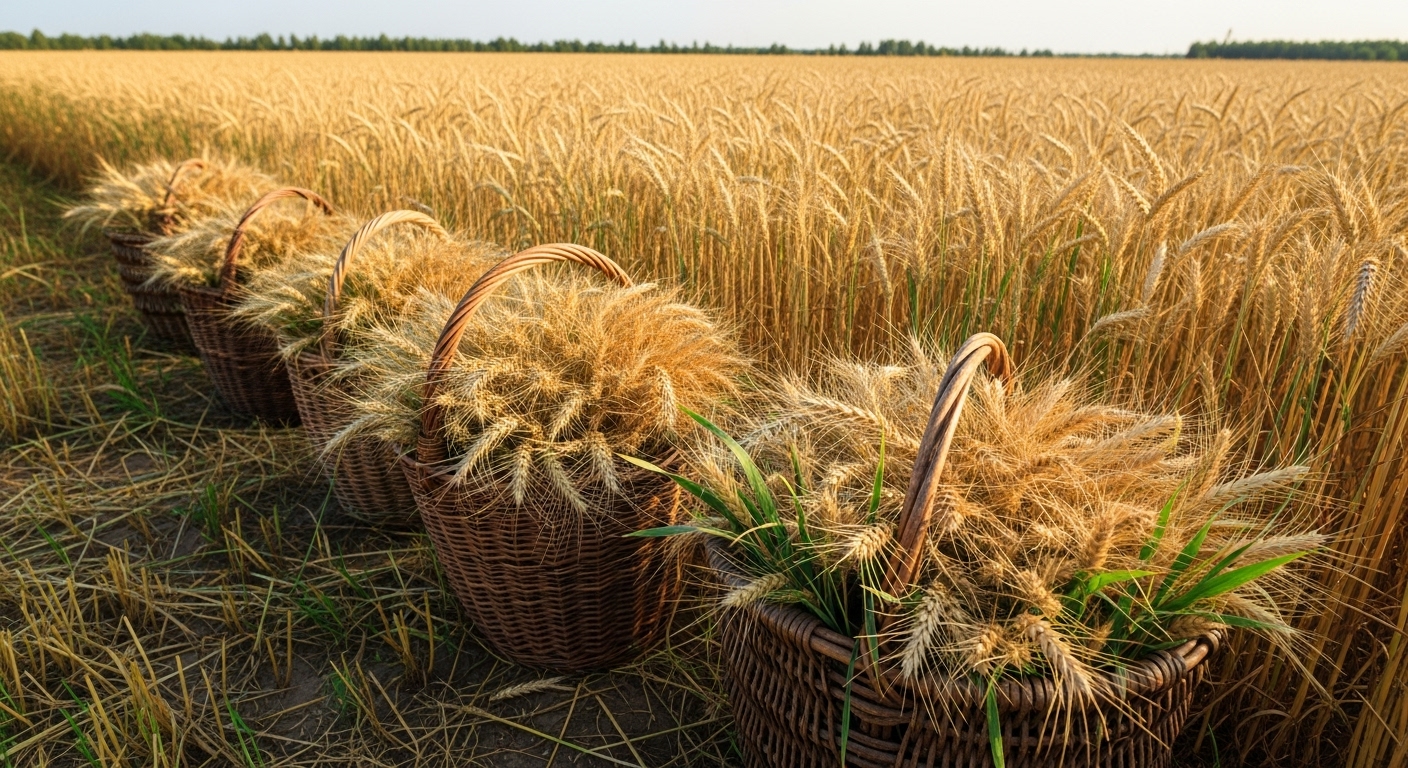
On any given day, the world's farms feed more than eight billion people, and the way they do it is responsible for a surprisingly large share of the planet's climate problem. The global food system — from the clearing of forests for pasture, to the methane that cattle belch, to the fossil fuels that power tractors and fertilize fields — generates roughly a quarter to a third of global greenhouse gas emissions. Within that food system, no single choice shapes the climate more than the choice of what we eat. Animal products, especially beef and dairy, are responsible for a disproportionate share of food-related emissions, and the growing global demand for meat is pushing the system toward more emissions, more deforestation, and more pressure on the land.
The flip side is a source of hope. The same diet that is healthier for people — one rich in plant foods and lower in animal products — is also far lighter on the planet. Studies consistently find that plant-based diets can cut food-related emissions by half or more compared with typical high-meat diets. As billions of people in developing countries move toward more meat-rich diets, the question of what "normal" eating will look like in the future has become one of the most consequential climate decisions of our time. This article explores how animal agriculture drives climate change, what the evidence says about plant-based diets, and how the world can make its food system both sustainable and fair.
How Food Drives Climate Change
The food system emits greenhouse gases at every stage, from farm to fork. Agriculture itself generates emissions through several channels. Livestock produce methane — a greenhouse gas roughly 80 times more potent than carbon dioxide over a 20-year period — through enteric fermentation (the digestion process that causes cattle to belch methane) and through the management of manure. Rice paddies, flooded for much of the growing season, also emit methane as organic matter decomposes in waterlogged soil. Nitrogen fertilizers, applied to most crops, release nitrous oxide, a greenhouse gas nearly 300 times more potent than carbon dioxide. And clearing forests to create farmland — particularly for cattle ranching and soy production in the Amazon — releases the carbon stored in trees and soil, a one-time pulse that is often not counted in food-system inventories but is among their most damaging consequences.
The Emissions Inequality of Foods
Not all foods are created equal in their climate impact, and the differences are enormous. Research that has assessed the greenhouse gas emissions of common foods per kilogram and per serving consistently finds a steep gradient. Beef is by far the most emissions-intensive food, followed by lamb and cheese. These animal products can have carbon footprints dozens of times larger than plant foods with similar nutritional value. Pork and chicken are intermediate — far lighter than beef, but still more emissions-intensive than most plant foods. Grains, legumes, vegetables, and fruits generally sit at the bottom of the emissions ladder. The pattern holds across almost every assessment, which is why dietary shifts toward plant foods are such a powerful lever for reducing food-related emissions.
The reasons for the gradient are rooted in biology and thermodynamics. Animals convert plant energy into animal protein at a loss: it takes many kilograms of feed to produce a kilogram of meat. Raising animals for food therefore requires more land, more water, and more energy than growing plant food directly. Ruminants — cattle and sheep — add the extra burden of methane. The result is that the most efficient way to feed the world is not necessarily the most profitable one, and the climate pays the difference.
What the Research Says About Plant-Based Diets
Over the past decade, a wave of rigorous studies — from the EAT-Lancet Commission, the Intergovernmental Panel on Climate Change, and many academic research groups — has converged on a consistent finding: shifting toward plant-rich diets is one of the most effective and immediate ways to reduce greenhouse gas emissions. The EAT-Lancet Commission, which brought together scientists from across disciplines to define a "planetary health diet," concluded that the global adoption of a diet centered on plants, vegetables, fruits, and whole grains, with limited animal protein, could feed ten billion people while staying within the Earth's environmental limits. The commission's analysis found that such a diet would cut food-related greenhouse gas emissions by roughly half compared with current trajectories, while also reducing land use, water use, and biodiversity loss.
The Land Dividend
One of the most striking findings of the research is the land question. Livestock farming uses the majority of the world's agricultural land, yet it provides only a fraction of the world's calories and protein. Pasture for grazing and cropland for animal feed together occupy an enormous share of global farmland. If the world shifted toward more plant-based diets, much of that land could be freed — some of it returning to forest, where it would absorb carbon, and some of it converted to producing plant food for people. The EAT-Lancet analysis estimated that dietary change could free hundreds of millions of hectares of land, an area larger than several countries. This "land dividend" is one of the most powerful reasons that dietary change is a climate solution, because it combines lower emissions with the potential for carbon sequestration.
The Health Connection
The case for plant-based diets is not only about the climate — it is about human health, and the two reinforce each other. Diets high in red and processed meat are associated with increased risk of heart disease, stroke, type 2 diabetes, and colorectal cancer, while diets rich in vegetables, fruits, legumes, whole grains, and nuts are associated with lower risk of these diseases. Global obesity rates are rising, and the spread of meat-heavy, ultra-processed diets is a major driver. A shift toward plant-rich eating would therefore deliver a double dividend: lower emissions and better health. The IPCC and the EAT-Lancet Commission have both highlighted this synergy, and public health organizations around the world now recommend plant-rich diets as part of the response to both the climate and health crises.
Nutritional Considerations
Well-planned plant-based diets can provide all the nutrients the human body needs, including protein, iron, calcium, and B12 when appropriately supplemented or obtained from fortified foods. Plant protein sources — legumes, soy, nuts, seeds, and whole grains — are nutritious and far lighter on the planet than animal protein. The key to a healthy plant-based diet is variety and planning, exactly as it is for any healthy diet. For populations with limited dietary variety, transitions may need to be supported by education, fortification, and access to affordable plant protein, but the nutritional science is clear: a plant-rich diet is not a compromise on health — for most people, it is an improvement.
Food and Climate at a Glance
1/4–1/3: Share of global greenhouse gas emissions from the food system
~80x: The 20-year warming potency of methane compared with carbon dioxide
~300x: The warming potency of nitrous oxide compared with carbon dioxide
~70%: Share of the world's agricultural land used for livestock and animal feed
~50%: Potential cut in food-related emissions from plant-rich diets
The Challenges of Dietary Change
If plant-based diets are so beneficial, why is change so slow? The barriers are cultural, economic, and political. Food choices are embedded in identity, tradition, and social life, and no amount of climate data will change what people eat if the alternatives are unaffordable, unavailable, or unappealing. In many parts of the world, meat remains a symbol of prosperity, and rising incomes naturally lead to higher meat consumption. In low-income countries, where diets are often already plant-heavy, the challenge is the opposite: ensuring that people have enough nutritious food at all. And the global food industry, with its enormous scale and influence, has a strong interest in the status quo. These barriers are real, but they are not insurmountable, and the policies that address them — from public procurement to food labeling to agricultural reform — are already being tested around the world.
What Policies Can Do
Governments have a powerful set of tools to steer diets toward sustainability, and they are beginning to use them.
Public Procurement and Campaigns
Public institutions — schools, hospitals, military bases, and government offices — feed millions of meals every day. Shifting public procurement toward plant-rich menus changes what people are served, normalizes plant-based eating, and sends a signal to the market. Public health campaigns, dietary guidelines, and food-based recommendations can encourage consumers to eat more plants, and the science shows that advice alone can shift behavior at the margins.
Prices, Labels, and Reform
Economic tools can align the price of food with its true cost. Subsidies that currently support the production of emissions-intensive foods can be redirected toward fruits, vegetables, and legumes. Carbon pricing on food, though politically difficult, would make plant foods relatively cheaper and meat relatively more expensive. Clear and honest food labeling — including environmental footprint labels — gives consumers the information to make climate-conscious choices. And agricultural research and innovation can make plant-based and cultivated alternatives to meat more affordable and appealing, accelerating the transition through competition rather than coercion.
Conclusion: The Power of the Plate
Few individual actions connect personal life to planetary systems as directly as the choice of what to eat. Every meal is a decision about land, water, emissions, and health, and the cumulative decisions of billions of eaters shape the climate. The evidence is unambiguous: diets rich in plants and lower in animal products are better for the planet and better for most people, and the shift toward them is one of the most cost-effective climate solutions available. The transition does not require that everyone become vegan, or that the world abandon the foods it loves — it requires that the world's default be shifted, so that healthy, sustainable, and affordable food is the easy choice. The plate is where the climate crisis becomes personal, and it is one of the places where action is both possible and powerful.
Frequently Asked Questions
How much do animal products contribute to climate change?
Animal agriculture is responsible for a large share of food-system emissions, roughly half or more depending on the accounting. Beef and dairy are the most emissions-intensive foods due to methane from cattle, land use for grazing and feed, and the inefficiency of converting feed into animal protein.
Can plant-based diets really cut emissions?
Yes. Research from the EAT-Lancet Commission, the IPCC, and others finds that plant-rich diets can cut food-related greenhouse gas emissions by roughly half compared with typical high-meat diets, while also reducing land use, water use, and biodiversity loss.
Are plant-based diets healthy?
Well-planned plant-based diets provide all necessary nutrients, including protein, iron, and calcium, and are associated with lower risk of heart disease, diabetes, and certain cancers. Variety and planning are important, as with any healthy diet.
Why is dietary change so difficult?
Food choices are shaped by culture, identity, cost, and availability. Meat is associated with prosperity in many regions, and the food industry has strong incentives to maintain the status quo. Changing diets requires policies that make sustainable food affordable, available, and appealing.
What can governments do to encourage sustainable diets?
Governments can shift public procurement toward plant-rich menus, update dietary guidelines, redirect subsidies toward plant foods, support carbon pricing and clear labeling, and invest in innovation for affordable alternatives to animal products.
Related Articles
The Make-or-Break Decade for Climate and Food — The food system's central role in the climate challenge and the coming decade.
Deforestation and Climate Change — How land clearing for farming and pasture drives forest loss and emissions.
Agriculture Under Pressure: Adapting to a Changing Climate — How farming must adapt to the climate impacts already arriving.