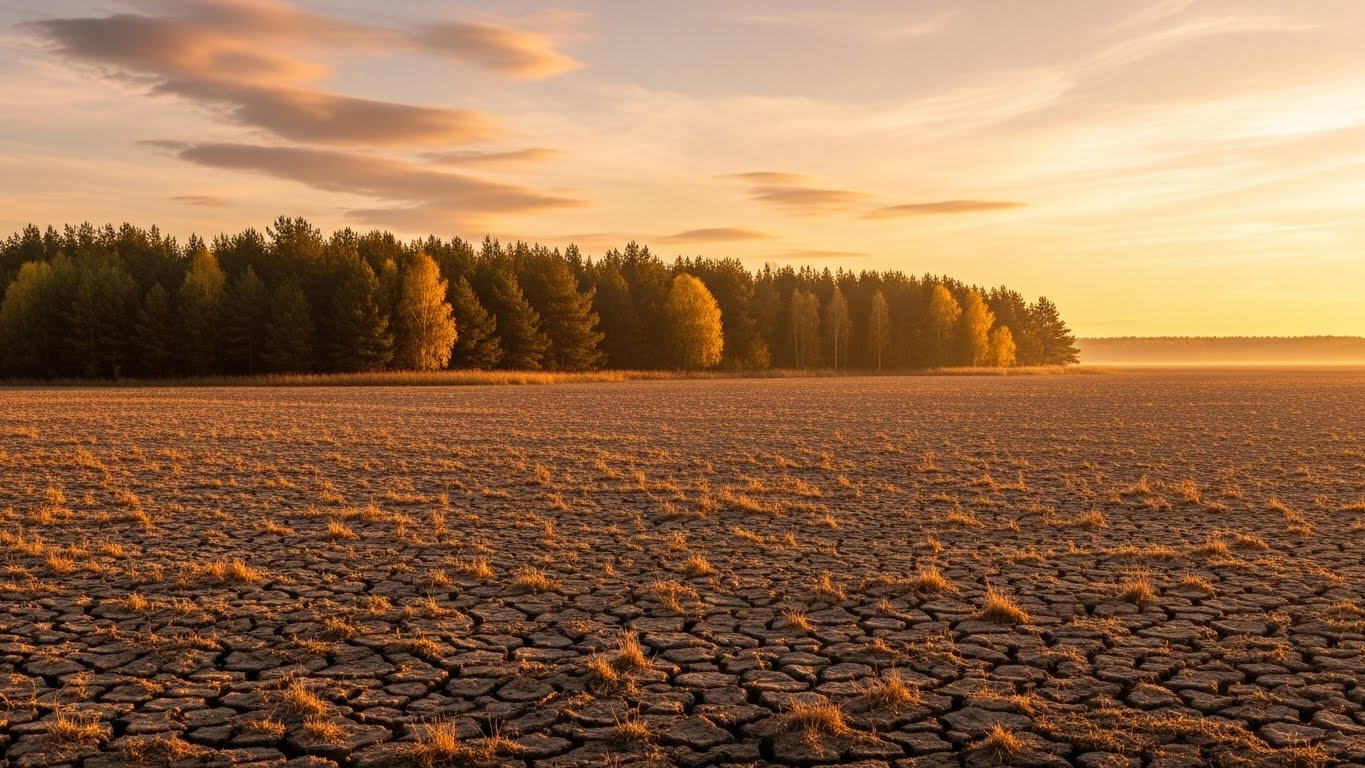
For years, the story of climate change was told in the language of mitigation — the cuts in emissions that would prevent the warming from happening. That story is essential, and it is unfinished. But it is no longer the whole story. The emissions of the past have already set in motion changes that cannot be undone: the temperature has risen, the seas are climbing, the extremes are arriving, and they will continue to do so for decades even under the most aggressive cuts. Alongside the urgent work of mitigation lies a second, equally essential task: adaptation, the deliberate effort to protect people, economies, and ecosystems from the climate impacts that are already here and already committed.
Adaptation is not a concession to defeat; it is the practical response to the reality of a changing world. It is the sea wall that protects a coastal city, the drought-resistant crop that keeps food on the table, the early warning system that gets people out of harm's way, and the building codes and insurance systems that allow communities to survive the shocks. The Intergovernmental Panel on Climate Change has been emphatic: adaptation and mitigation are complementary, not competing. The world needs both — mitigation to limit how bad the future gets, and adaptation to survive the present. This article explores what adaptation means in practice, how it is being implemented around the world, and why it is the most underinvested climate priority of all.
What Adaptation Actually Means
Adaptation is a portfolio of actions that reduce vulnerability to climate impacts. It is not a single technology or a single policy but a way of thinking — anticipating the changes that are coming and building the capacity to cope with them. The actions fall into several broad categories. Physical infrastructure: sea walls, storm barriers, flood defenses, and dams. Natural solutions: mangroves that buffer coasts, wetlands that absorb floods, and urban green space that cools. Human systems: early warning systems, health care for heat, and social protection for those displaced or impoverished by impacts. Agricultural adaptation: drought-tolerant crops, improved irrigation, and diversified livelihoods. And financial adaptation: insurance, disaster funds, and the instruments that allow communities to recover. Each is a response to a specific risk, and together they form a system of protection.
The Scale of the Task
The scale of adaptation needed is enormous and growing. Every fraction of a degree of warming that is not prevented adds to the adaptation burden — the sea walls that must be higher, the crops that must be more resilient, the disasters that must be absorbed. The Global Commission on Adaptation estimated that investing $1.8 trillion in adaptation from 2020 to 2030 could yield more than $7 trillion in benefits — avoided losses, increased productivity, and co-benefits for health and development. Yet adaptation remains dramatically underfunded: the world's poorest and most vulnerable countries, which face the greatest adaptation needs, receive only a fraction of the climate finance they require. The gap between need and investment is one of the defining failures of the climate response.
Adaptation in Practice: Around the World
Adaptation is not an abstract concept; it is happening now, in thousands of places, with concrete results. The Netherlands, a country largely below sea level, has spent generations building one of the world's most sophisticated flood defense systems — the Delta Works, storm surge barriers, and a national commitment to "living with water" rather than fighting it. Bangladesh, one of the world's most climate-vulnerable nations, has built cyclone shelters, early warning systems, and elevated platforms that have dramatically reduced death tolls from cyclones even as the storms intensify. The city of Ahmedabad in India was the first in South Asia to develop a heat action plan, pairing early warning with cooling centres and outreach to the vulnerable. Kenya and other African nations are expanding drought-resistant crops, water harvesting, and index-based insurance. These are not experiments; they are working systems, and they show what adaptation can achieve.
Adaptation at the Coast
Sea level rise is forcing some of the most consequential adaptation decisions. Some cities are building up: London's Thames Barrier, the storm surge defences of Rotterdam, and the coastal protections of cities from New York to Jakarta. Some are building out: the artificial islands and elevated districts of the Gulf, and the land reclamation that protects crowded deltas. And some are planning retreat: the deliberate, managed relocation of communities from the most exposed coastlines, as practiced in Alaska, parts of the Pacific, and increasingly in the United States. The choice between protect, adapt, and retreat is one of the most difficult and consequential facing coastal societies, and the decisions are being made now, often without adequate planning or finance.
Adaptation and Development: The Double Dividend
One of the most powerful insights of adaptation science is that it is not a cost to be borne but an investment with returns. Adaptation and development are deeply linked: most adaptation actions are also development actions. Better water management serves both adaptation and growth. Climate-resilient agriculture increases yields even in good years. Green infrastructure provides flood protection and quality of life. Health systems that can handle heatwaves also handle other emergencies. The Global Commission on Adaptation's finding that every dollar invested in adaptation returns several dollars in benefits reflects this reality — adaptation is not charity or sacrifice; it is among the most productive investments available. The double dividend of adaptation is that it reduces risk today and improves lives even if the climate threats were to disappear tomorrow.
Adaptation at a Glance
$1.8 trillion: The investment needed in adaptation by 2030, yielding $7 trillion in benefits
70%: Share of climate finance that historically went to mitigation, leaving adaptation short
7: Dollars of benefits for every dollar invested in adaptation
Storm barriers: The iconic adaptation infrastructure of the Netherlands and London
Cyclone shelters: Bangladesh's life-saving adaptation built over decades
The Limits of Adaptation
Adaptation has limits, and acknowledging them is essential. There are climate impacts that cannot be adapted to — the so-called "hard limits" of adaptation. A low-lying island nation that loses its land to sea level rise cannot be protected by adaptation alone. A coral reef bleached beyond recovery cannot be restored to what it was. Communities exposed to wet-bulb temperatures beyond human tolerance face limits that no infrastructure can fully overcome. And adaptation cannot keep pace with unlimited warming: the faster and further the climate changes, the harder adaptation becomes, until it fails. This is why adaptation can never replace mitigation — the two are not alternatives. The honest framing is that mitigation determines how hard the adaptation problem becomes, and adaptation determines whether the world can survive the warming that mitigation fails to prevent. Both are necessary; neither is sufficient alone.
Financing Adaptation
The single greatest barrier to adaptation is money — specifically, money in the places where adaptation is needed most. The countries most exposed to climate impacts are also, overwhelmingly, the countries least able to pay for protection. The international community has committed to channel climate finance to adaptation, and a growing share of climate finance is being directed toward it, but the sums remain a fraction of the need. The challenges are multiple: adaptation projects are often less attractive to investors than mitigation projects because their returns are harder to measure; they are often smaller, more dispersed, and more local; and they frequently benefit the poorest, whose needs are hardest to monetize. Meeting the adaptation gap requires concessional finance, grants, and public investment — and it requires that adaptation be treated not as an afterthought but as a central pillar of the climate response.
Conclusion: The Future Is Built, Not Avoided
Adaptation is the recognition that the future will be different from the past, and that the shape of that future is something we can influence. The warming already committed will bring impacts that no mitigation can prevent; the choice facing every community, city, and nation is whether to meet those impacts with preparation or with suffering. Adaptation is not glamorous, and it is not a substitute for the emissions cuts that remain the foundation of climate action. But it is essential — the sea wall, the resilient crop, the early warning, the insurance, and the courage to plan for a future that is not the past. The world that adapts is not a world that has given up; it is a world that has decided to survive, to protect its people, and to build a future that can withstand the change that is already coming. The future will not be avoided; it will be built — and adaptation is the building.
Frequently Asked Questions
What is climate adaptation?
Climate adaptation is the deliberate effort to reduce vulnerability to climate impacts and protect people, economies, and ecosystems from the changes that are already occurring or are committed. It includes infrastructure, nature-based solutions, early warning, agricultural resilience, and financial protection.
How is adaptation different from mitigation?
Mitigation reduces greenhouse gas emissions to limit future warming. Adaptation prepares for the climate impacts that are already happening or unavoidable. They are complementary: mitigation limits how bad the problem gets, while adaptation determines how well society survives it.
What are examples of adaptation in action?
Examples include the Netherlands' flood defenses, Bangladesh's cyclone shelters, heat action plans in cities like Ahmedabad, drought-resistant crops in Africa, mangrove restoration on coasts, early warning systems, and insurance that allows communities to recover from disasters.
Why is adaptation underfunded?
Adaptation is underfunded because its benefits are harder to measure than mitigation's, its projects are often small and local, it serves the poorest communities, and the countries with the greatest needs have the least capacity to pay. International climate finance directed to adaptation remains a fraction of the need.
Are there limits to adaptation?
Yes. Some impacts — the loss of low-lying islands to sea level rise, the collapse of some ecosystems, heat beyond human tolerance — cannot be fully adapted to. Adaptation also becomes harder as warming increases, which is why mitigation and adaptation must proceed together.
Related Articles
Rising Sea Levels: The Global Coastal Crisis — The coastal impacts driving some of the hardest adaptation decisions.
Extreme Heat: The Deadliest Climate Hazard — The heat risk that adaptation systems like early warning and cooling can prevent.
Nature-Based Solutions: Letting Ecosystems Fight Climate Change — The natural infrastructure at the heart of modern adaptation.