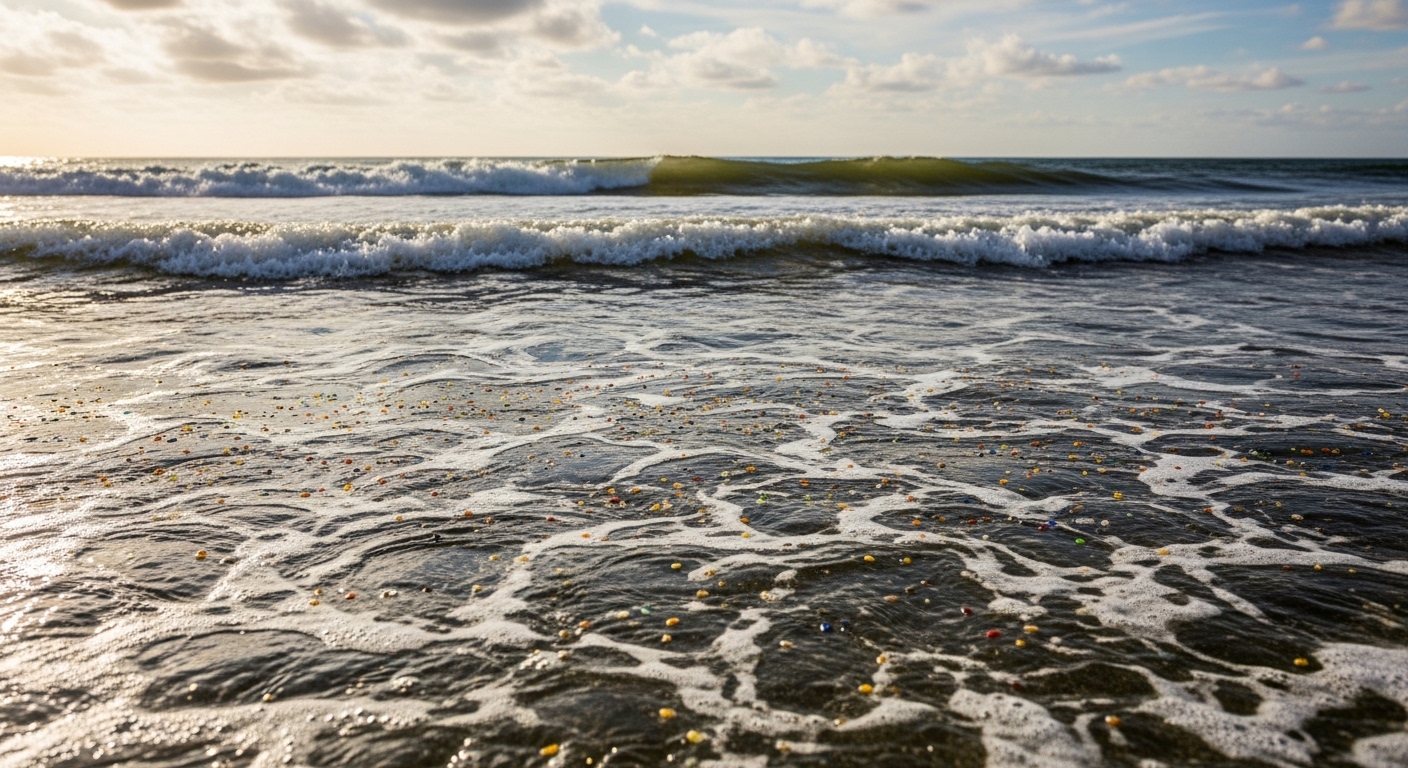
Somewhere in the Pacific Ocean, thousands of kilometres from the nearest shore, there is a region where the water holds more plastic than life. It is not a solid island of bottles and bags, as the popular image suggests, but a diffuse soup — a swirling accumulation of fragments and microplastics concentrated by the ocean currents into a gyre that covers an area larger than some countries. The Great Pacific Garbage Patch, as it is known, is the most famous symbol of the plastic ocean, but it is only one patch in a global problem. Every ocean basin has its gyre of debris, and every coastline, from the most industrialized to the most remote, is littered with plastic.
The scale of the crisis is difficult to grasp. Estimates of the plastic entering the ocean each year range from eight to twelve million tonnes — the equivalent of dumping a garbage truck full of plastic into the sea every minute. The cumulative total is far larger: hundreds of millions of tonnes of plastic now sit in the ocean, fragmenting slowly into ever-smaller pieces. Plastic has been found in the guts of fish in the deepest trenches, in the tissue of seabirds on the most remote islands, and in the ice of both polar regions. The plastic ocean is not a hypothetical future — it is the present, and it is growing. This article explores where the plastic comes from, what it does to marine life, why it is so hard to clean up, and the solutions that are beginning to take shape.
How Plastic Gets to the Ocean
Almost none of the plastic in the ocean was dumped there directly by ship. The overwhelming majority arrives through rivers, carried from the land by rainfall, runoff, and mismanaged waste. The world's rivers — especially those in rapidly industrializing countries — transport enormous loads of plastic from inland cities and farms to the sea. Analysis has shown that a small number of rivers, concentrated in Asia and Africa, account for a large share of the global riverine plastic flux. The Yangtze, the Ganges, the Mekong, and a handful of others deliver millions of tonnes between them, the legacy of rapid economic growth outpacing the construction of waste infrastructure.
The Waste Problem
At the root of the problem is the mismatch between plastic production and waste management. Plastic is produced cheaply and in enormous quantities, but the systems to collect, recycle, and dispose of it have not kept pace. Globally, roughly half of plastic waste is mismanaged — dumped in open landfills, burned, or simply discarded into the environment. In low- and middle-income countries, where a growing share of the world's plastic is used, waste collection services are often absent, and plastic flows into rivers and oceans. As the developing world's middle class grows, the plastic burden is set to grow with it, unless the infrastructure and policies catch up.
Fishing gear adds another distinctive dimension to ocean plastic. Nets, lines, traps, and floats are lost or abandoned at sea in enormous quantities — the so-called ghost gear that continues to fish and entangle marine life for decades after it is lost. Ghost gear may account for a significant share of the larger plastic debris in the ocean, and it is uniquely damaging because it is deliberately designed to catch animals. An estimated one million seabirds and 100,000 marine mammals die each year from plastic ingestion and entanglement.
The Impact on Marine Life
Plastic harms marine life in many ways, and the harm scales from individual animals to entire ecosystems. The most visible victims are the large animals. Sea turtles mistake plastic bags for jellyfish and choke or starve with blocked stomachs. Seabirds feed plastic to their chicks, which die or grow with reduced fitness. Whales and dolphins, some with stomachs packed with kilograms of plastic, wash ashore dead on beaches around the world. Seals, sea lions, and turtles are entangled in ghost gear and drown or starve. The images of these animals are haunting, and they represent only the small fraction of harm that is visible.
From the Deep to the Food Web
Below the surface, the damage continues at smaller scales. Filter feeders — mussels, oysters, barnacles, and corals — ingest microplastics as they strain food from the water. Fish and crustaceans ingest fragments that they mistake for prey. The plastic works its way through the food web, and it accumulates: top predators carry the concentrated load of the particles in their prey. The harm is not only physical. Plastics leach chemical additives and concentrate persistent organic pollutants from the surrounding water, and these chemicals enter animals along with the plastic. As microplastics and their chemicals move up the food chain, they arrive in the bodies of animals at the top — including humans who eat seafood.
Ecosystem Damage
Plastic can also smother ecosystems directly. On the seafloor, plastic sheeting can blanket corals and benthic communities, blocking light and smothering life. In the water column, large aggregations of debris shade the plankton that form the base of the food web. In coastal habitats, plastic litter degrades the visual and ecological character of beaches, mangroves, and estuaries. And the persistence of plastic means that these impacts continue to compound: a plastic bottle can last for hundreds of years, fragmenting into particles that last longer still.
Why Clean-Up Is Not the Answer
It is natural to respond to images of ocean garbage with the desire to clean it up. Projects to remove plastic from the ocean's surface, such as the Ocean Cleanup's floating barriers, are well-intentioned and symbolically powerful. But the arithmetic of clean-up is daunting. The plastic in the ocean is diffuse, distributed across the entire water column and the seafloor, and much of it is already microplastic, too small and too widespread to recover. Even the most efficient surface clean-up systems can only address a fraction of the floating debris, and they do nothing for the plastic that has sunk, fragmented, or been ingested. Clean-up has a role — particularly in the most polluted hotspots and in recovering ghost gear — but it cannot solve a problem that is being fed by millions of tonnes of new plastic every year.
The fundamental math is simple: stopping the flow is more effective than cleaning the ocean. Every tonne of plastic that is not produced, or is collected and recycled on land, is a tonne that never reaches the sea. The international effort to curb plastic pollution is therefore focused overwhelmingly on reducing production and improving waste management at the source, with clean-up reserved for the most damaging and recoverable debris. This is the lesson of every successful environmental cleanup in history: prevent the pollution, then remove what remains.
The Plastic Ocean at a Glance
8–12 million tonnes: Plastic entering the ocean every year
1 garbage truck: The equivalent plastic load dumped into the ocean every minute
1 million: Seabirds killed each year by plastic ingestion and entanglement
100,000: Marine mammals killed each year by plastic
400+ years: Time for a plastic bottle to break down in the ocean
The Plastic Value Chain: Where to Intervene
The solutions to the plastic ocean cluster at specific points in the plastic value chain, and each point has its own policy levers.
Production
Reducing the production of virgin plastic is the most fundamental lever. Policies that discourage single-use packaging, that set recycled content standards, and that tax or restrict the manufacture of problematic plastics all reduce the volume of material that must be managed at the end of its life. The transition to a circular economy — in which plastic is designed to be reused, repaired, and recycled rather than discarded — reduces the demand for new production while keeping the material in use.
Waste Management
Improving waste collection, sorting, and recycling is the most direct way to stop plastic from leaking into the environment. The gap is most acute in low- and middle-income countries, where investment in waste infrastructure delivers the largest reductions in plastic leakage per dollar spent. Extended producer responsibility — in which producers pay for the collection and recycling of their packaging — provides the financing for these systems and aligns producer incentives with environmental outcomes. Deposit-return schemes for bottles achieve high collection rates where they are implemented.
Ocean-Specific Measures
Several interventions target plastic pollution at its ocean source. Improving port facilities so that ships and fishing boats can dispose of waste properly prevents direct dumping at sea. Marking and recovering fishing gear, and requiring the reporting of lost gear, reduces ghost gear. Ballast water and cargo washing regulations prevent the unintentional release of plastic pellets and other debris. And international agreements, including the UN's global plastics treaty, are attempting to bind countries to common targets for reducing plastic pollution.
The Global Plastics Treaty
The most significant development in the fight against plastic pollution is the negotiation of a global treaty under the United Nations, sometimes called the Global Plastics Treaty. Modeled on the landmark environmental agreements of the past — the Montreal Protocol for ozone, the Stockholm Convention for persistent pollutants — the treaty aims to establish legally binding rules covering the entire life cycle of plastic, from production to disposal. The negotiations have been contentious, with producer countries and the petrochemical industry seeking weaker provisions while environmental groups and many developing nations push for binding production caps, reduction targets, and a clear timeline for ending plastic pollution. The treaty is the clearest recognition that the plastic ocean is a global problem requiring a coordinated global response.
Conclusion: The Ocean Is Not a Garbage Can
The plastic ocean is a monument to a century of convenience. In less than a hundred years, humanity created a material so cheap, so versatile, and so durable that it now chokes the very oceans that sustain life on Earth. The plastic is not going to disappear on its own — it will fragment and persist for centuries, outlasting the economies and empires that created it. But the crisis is not insoluble. The solutions are known: produce less, manage waste better, recover what leaks, and bind the world to common rules. What is required is the collective decision to treat the ocean as the living system it is, rather than the convenient dump it has become. The plastic in the ocean is a choice, and it can be unchosen.
Frequently Asked Questions
How much plastic is in the ocean?
Estimates put the amount of plastic entering the ocean at 8 to 12 million tonnes per year, with hundreds of millions of tonnes already accumulated in marine environments worldwide. The load continues to grow every year.
Where does ocean plastic come from?
Most ocean plastic arrives from the land via rivers, carried by runoff and mismanaged waste. A small number of rivers in Asia and Africa account for a large share of the global flow. Fishing gear lost at sea is an additional major source.
How does plastic harm marine life?
Plastic harms marine life through ingestion, which can block stomachs and cause starvation; entanglement in ghost gear; the leaching of toxic additives; and the concentration of persistent pollutants on plastic surfaces. Seabirds, sea turtles, marine mammals, fish, and shellfish are all affected.
Can we clean up the plastic already in the ocean?
Clean-up is possible but cannot solve the problem on its own. Ocean plastic is diffuse, spread through the water column and seafloor, and much of it has fragmented into microplastics too small to recover. The priority is stopping the flow of new plastic at the source.
What is being done to stop plastic pollution?
Actions include reducing single-use plastic, improving waste collection and recycling, extended producer responsibility, deposit-return schemes, recovering ghost gear, and negotiating a global plastics treaty under the United Nations to establish binding rules across the plastic life cycle.
Related Articles
Microplastics: The Invisible Pollutant Everywhere — The tiny fragments into which ocean plastic breaks down, and their spread through the food web.
Ocean Acidification and Warming: The Twin Threats — The chemical pressures on the ocean that accompany the physical burden of plastic.
Biodiversity Loss and the Climate Crisis — How pollution, alongside warming, drives the loss of marine and terrestrial species.