Every year, humanity grows enough food to feed more than ten billion people — and then wastes roughly a third of it. One billion tonnes of food is thrown away or lost every year, according to the United Nations Environment Programme, at a time when close to 700 million people go hungry. In rich countries, food is wasted at the point of consumption — in supermarkets, restaurants, and homes — while in poor countries it is lost on the farm and in the supply chain, spoiling before it reaches a plate. Either way, the waste is not just an ethical scandal; it is a climate disaster hiding in plain sight.
The climate cost of food waste is enormous. The food that is wasted was grown on land, fed with water, fertilized, harvested, processed, transported, and stored — and every step of that journey had a greenhouse gas footprint. When the food is thrown away, all of that embedded carbon is wasted too, and if the food decomposes in a landfill, it releases methane, a greenhouse gas far more potent than carbon dioxide. The Food and Agriculture Organization estimates that food loss and waste generate about eight to ten percent of global greenhouse gas emissions — comparable to the aviation and road transport industries combined. This article explores the scale of food waste, its climate impact, and the surprisingly cost-effective solutions available.
The Two Faces of Food Waste
Food waste is often described as having two distinct forms, and they have different causes and solutions. Food loss is the food that is lost in the production, harvesting, storage, and transport stages of the supply chain — the grain that rots in the field, the fruit that spoils in storage, the harvest that cannot reach market. Food loss is concentrated in low- and middle-income countries, where infrastructure, storage, and cold chains are limited, and where a poor road or a lack of refrigeration can mean a harvest is lost. Food waste is the food discarded at the retail and consumer stages — the supermarkets that throw out imperfect produce, the restaurants that serve oversized portions, the households that buy more than they can eat. Food waste is concentrated in high-income countries, where food is abundant and cheap relative to income.
The Inequality of Waste
The distribution of food waste mirrors the inequality of the food system. In rich countries, waste is a problem of abundance — food that is too cheap to value, sold in portions too large to finish, and discarded by households who buy without thinking. In poor countries, waste is a problem of scarcity and infrastructure — food that is lost not because it is undervalued but because the means to preserve and transport it do not exist. The same global food system wastes a third of its product while nearly a tenth of humanity goes hungry, and the solutions are correspondingly different: reducing consumption waste in the rich world, and building the infrastructure of preservation in the poor world.
The Climate Cost
The climate footprint of food waste is a triple burden. First, the embedded emissions: the food that is wasted was produced with emissions at every stage of its journey — the land converted, the fertilizers made, the fuel burned, the water pumped. Wasting that food means the emissions were spent for nothing. Second, the decomposition emissions: when food rots in a landfill, it decomposes anaerobically and releases methane — a greenhouse gas roughly 80 times more potent than carbon dioxide over two decades. Food is the largest single component of municipal waste sent to landfills, and its decomposition is a major source of the methane that landfills emit. Third, the land-use cost: the land that grew wasted food could have grown food that was eaten, or could have been left as forest or grassland storing carbon. Every hectare of land used to grow food that is thrown away is a hectare not available for either feeding people or storing carbon.
The Methane Problem
The methane from food waste is a particular focus of climate policy, because methane is both highly potent and short-lived. Cutting methane is one of the fastest ways to slow near-term warming, and food waste is one of the largest addressable sources. The Global Methane Pledge, signed by more than a hundred countries, commits to cutting methane emissions by thirty percent by 2030, and reducing food loss and waste is a central component of the strategy. Diverting food waste from landfills — through composting, anaerobic digestion, and reductions at the source — is one of the most cost-effective methane reductions available.
The Solutions
The remarkable thing about food waste is that it is one of the climate problems with the most cost-effective solutions. The United Nations has estimated that reducing food loss and waste could deliver significant emissions reductions at a lower cost than almost any other mitigation option, while simultaneously addressing hunger.
Preventing Waste at the Source
The cheapest and best solution is to prevent food from being wasted in the first place. At the household level, this means buying what will be eaten, storing food properly, and cooking with the ingredients on hand. In supermarkets and restaurants, it means rethinking portion sizes, donating surplus food, and relaxing the cosmetic standards that reject imperfect produce — a significant share of edible food is discarded because it does not look "right." At the supply chain level, it means better forecasting of demand, better storage and packaging, and the flexibility to redirect surplus to where it is needed. Prevention is not glamorous, but it is the highest-value action available.
Rescuing and Redistributing
Where food cannot be prevented from being surplus, the next best action is to rescue it. Food banks and redistribution networks collect edible surplus from farms, retailers, and restaurants and deliver it to people in need. Food rescue programs have expanded dramatically in recent years, and the technology platforms that connect surplus food with charities have shown that the barriers are logistical, not insurmountable. Redistribution addresses waste and hunger at once, and in many jurisdictions, tax incentives and liability protections encourage businesses to donate rather than discard.
Composting and Anaerobic Digestion
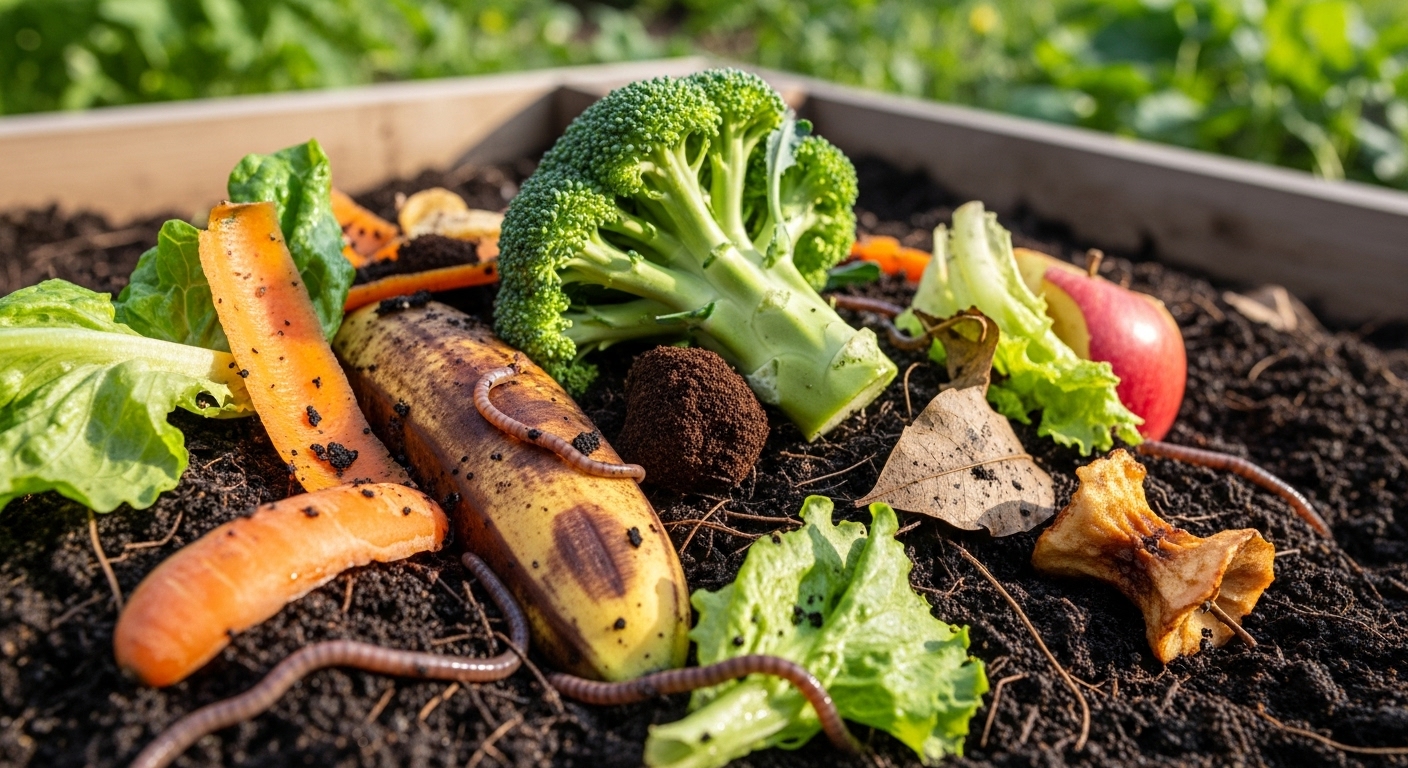
Where food cannot be prevented or rescued, the final action is to manage its disposal so that it does not become methane. Composting turns food waste into a soil amendment, recycling its nutrients and avoiding methane release. Anaerobic digestion goes further: it captures the biogas produced by decomposition and uses it for energy, converting a methane source into a renewable fuel. Diverting food waste from landfills to these systems is one of the most cost-effective methane reductions available, and the compost and digestate produced benefit agriculture. Cities around the world are building the collection systems and facilities that make this diversion possible.
Food Waste at a Glance
1 billion: Tonnes of food wasted or lost every year
1/3: Share of all food produced that never reaches a plate
8–10%: Share of global emissions from food loss and waste
700 million: People who go hungry while food is wasted
~80x: The 20-year warming potency of the methane released when food rots in landfill
The Economics of Food Waste
The economic argument against food waste is overwhelming. The Food and Agriculture Organization estimates that food loss and waste cost the global economy about a trillion dollars per year — the value of the food itself, plus the land, water, energy, and labour wasted in producing it. For businesses, reducing waste is directly profitable: the food that is not wasted is food that was already paid for, and every tonne diverted from the bin is money saved. For households, the waste is a drain on budgets — a typical family throws away a meaningful share of the food it buys. And for governments, the waste is a drain on the environment, the food system, and the budget for the methane and landfill capacity that the waste requires. Reducing food waste is the rare climate action that saves money while cutting emissions.
Conclusion: The Waste That Could Feed the World
Food waste is the most absurd tragedy in the climate story — the one in which humanity grows food, spends a third of it, and pays for the privilege with both hunger and emissions. The solutions are not exotic or expensive; they are the practical actions of buying less, storing better, donating surplus, and composting the rest. They save money, they feed the hungry, and they cut the methane and embedded carbon that make waste a climate problem. The global target, embedded in the Sustainable Development Goals, is to halve food waste by 2030, and the progress is real but uneven. The waste that could feed the world is also the waste that could cool the planet — and both are within reach. It is time to stop treating food as something to be thrown away and start treating it as the precious, climate-costly resource it is.
Frequently Asked Questions
How much food is wasted globally?
About one billion tonnes of food — roughly a third of all food produced — is wasted or lost every year, according to the UN Environment Programme. The waste happens at every stage, from farm to plate.
Why does food waste cause climate change?
Wasted food carries the emissions of its production, releases methane when it decomposes in landfills, and uses land that could otherwise store carbon. Food loss and waste generate an estimated 8 to 10 percent of global emissions.
What is the difference between food loss and food waste?
Food loss is food lost in production and the supply chain, concentrated in low-income countries with limited storage and transport. Food waste is food discarded at retail and consumption, concentrated in high-income countries.
What are the best ways to reduce food waste?
Prevent waste by buying, storing, and cooking wisely and relaxing cosmetic standards; rescue surplus through food banks and redistribution; and divert what remains from landfill through composting and anaerobic digestion.
Does reducing food waste save money?
Yes. Food loss and waste cost the global economy about a trillion dollars per year. Reducing waste is directly profitable for businesses and households, and it cuts methane and embedded emissions at the same time.
Related Articles
The Make-or-Break Decade for Climate and Food — The food system's central role in the coming decade of climate action.
Agriculture Under Pressure: Adapting to a Changing Climate — The broader transformation of the food system under climate stress.
Methane Emissions: A Threat to Our Planet — The methane from rotting food and other sources, and the push to cut it.