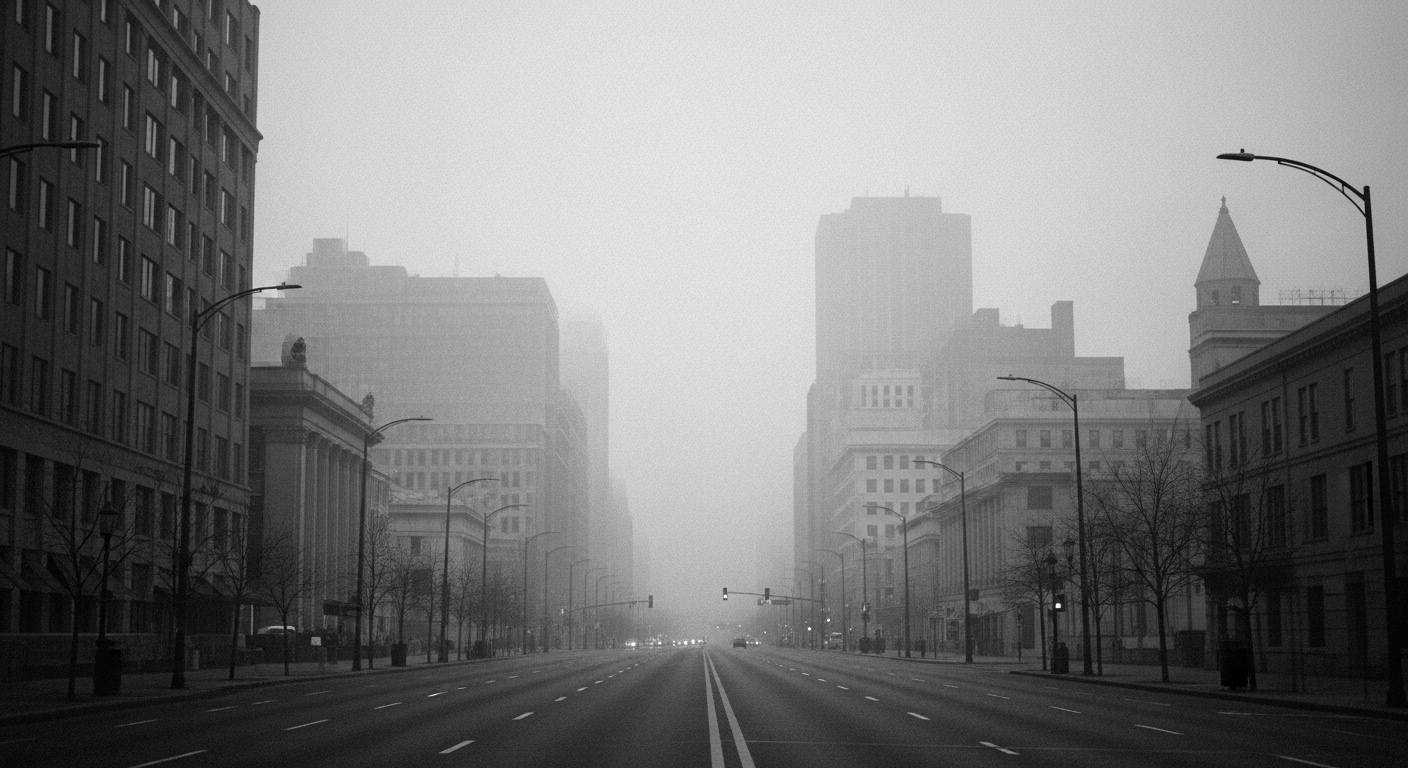
If you live in almost any large city in the world, you are breathing air that contains particles and gases that your lungs were never designed to handle. Soot from diesel engines, dust from construction, sulfate aerosols from power plants, and ozone formed in the summer sun all mix into the air you take in with every breath. The World Health Organization estimates that air pollution causes more than seven million premature deaths every year — more than smoking, more than unsafe water, and more than several major diseases combined. And the very same emissions that foul the air are also warming the planet. Air pollution and climate change are not two separate crises that happen to occur at the same time; they are two faces of the same fossil-fueled system.
The connection runs deeper than shared sources. Pollution and warming interact: heatwaves worsen ozone and smog, and climate-driven wildfires blanket cities in hazardous smoke. Cleaner air and a stable climate are not competing goals — they are the same goal viewed from different angles. When a city switches from coal to solar, it simultaneously cuts the carbon dioxide that warms the planet and the particulate pollution that kills people. This article explores how air pollution harms health, how climate change amplifies those harms, and why the fight for clean air is inseparable from the fight for a stable climate.
What's in the Air?
The air we breathe is a mixture, and its harmful components fall into a few broad categories. Particulate matter — the fine particles known as PM2.5 and PM10 — is the most dangerous and the most closely studied. PM2.5 describes particles smaller than 2.5 micrometres in diameter, about one-thirtieth the width of a human hair. Because they are so small, they bypass the body's defenses and penetrate deep into the lungs, where they can enter the bloodstream and travel to nearly every organ. These particles come from combustion: vehicle exhaust, coal and gas power plants, wood burning, construction, and industrial processes. The composition varies, but the harm is consistent across every population studied.
Gases and Ground-Level Ozone
Beyond particles, the air carries gases with their own health effects. Ground-level ozone is not the protective ozone of the stratosphere; it is a pollutant formed near the surface when sunlight reacts with nitrogen oxides and volatile organic compounds emitted by vehicles and industry. Ozone irritates the airways, worsens asthma, and damages lung tissue, and its concentrations peak on hot, sunny days. Nitrogen dioxide, another combustion product, is itself associated with respiratory harm and is a precursor of both ozone and fine particles. Sulfur dioxide, largely from coal burning, causes acid rain and respiratory illness. And carbon monoxide, from incomplete combustion, reduces the blood's ability to carry oxygen.
These pollutants do not stay where they are emitted. Smoke and haze travel hundreds and even thousands of kilometres across borders and continents. The fine dust that darkens the sky over the Sahel in West Africa began in the Sahara. The brown clouds that obscure the skies over South Asia carry emissions from millions of cookstoves, vehicles, and power plants across the subcontinent. Air pollution is a local problem with regional and global reach, which means its solutions must be coordinated at every scale.
How Air Pollution Harms Health
The health effects of air pollution begin at the lungs but extend far beyond them. Decades of research have established that fine particles harm the cardiovascular system, increasing the risk of heart attacks, strokes, and heart failure. They trigger respiratory disease, worsening asthma, bronchitis, and chronic obstructive pulmonary disease, and increasing the risk of lung infections. Air pollution is a recognized cause of lung cancer, classified by the International Agency for Research on Cancer alongside tobacco smoke. Emerging evidence links pollution to diabetes, neurological harm, and adverse birth outcomes, including low birth weight and preterm birth. The burden falls heaviest on children, the elderly, and people with pre-existing conditions — and on low-income communities, which tend to live nearer to roads, ports, and industrial facilities.
The Economic Cost
The health damage from air pollution carries an enormous economic price. Illness means lost productivity, missed workdays, and medical expenses. Premature death removes people from the workforce and deprives families of breadwinners. Studies have estimated the global economic cost of air pollution at trillions of dollars per year — several percent of global economic output. The World Bank has estimated that the damage from premature deaths caused by air pollution costs more than $8 trillion per year globally, equivalent to more than six percent of global GDP. No country is immune; the costs are simply concentrated in the places with the dirtiest air.
The Climate Connection
The deepest link between air pollution and climate change is their shared source. Fossil fuels — coal, oil, and gas — produce the carbon dioxide that drives global warming and the particles and gases that drive air pollution. Every tonne of coal burned is simultaneously a tonne of future warming and a dose of present-day pollution. This means the two crises cannot be solved separately: reducing fossil fuel combustion is the single most effective action for both clean air and a stable climate. When the world's leaders speak of an energy transition, they are, in effect, describing the most powerful public health intervention available.
Climate Change Makes Pollution Worse
Climate change does not merely share causes with air pollution — it amplifies it. Warmer temperatures accelerate the chemical reactions that form ground-level ozone, so heatwaves bring worse smog. The longer, hotter fire seasons driven by climate change produce smoke that blankets entire regions with hazardous particulate levels. The 2023 Canadian wildfire season, made more intense by heat and drought, sent record levels of smoke across North America, turning the skies of New York City orange and prompting air quality warnings across the eastern United States. Dust storms, pollen seasons, and mold growth are all influenced by the changing climate. In the warmer, drier world that emissions are creating, each of these airborne hazards becomes more frequent and more severe.
The Aerosol Trade-Off
There is a subtle complication in the pollution–climate relationship. Some air pollutants, particularly sulfate aerosols from coal burning, actually cool the planet by reflecting sunlight and brightening clouds. These "cooling aerosols" mask a portion of the warming that greenhouse gases would otherwise produce. This means that cleaning up pollution — a public health victory — can temporarily accelerate warming, because the cooling mask is removed. This is not an argument for polluting; the heat-related deaths from unmasked warming are dwarfed by the millions of lives saved by clean air. But it is a reminder that the transition must be deliberate and complete: replace fossil fuels with clean energy rather than merely scrubbing emissions, so that the cooling mask is replaced by genuinely clean sources of power.
Air Pollution at a Glance
7+ million: Premature deaths per year attributed to air pollution
$8+ trillion: Estimated annual global cost of pollution-related premature deaths
2.5 µm: Diameter of the fine particles that penetrate deep into the lungs
~90%: Share of the world's population breathing air that exceeds WHO guideline levels
1 in 8: Global deaths linked to air pollution
Case Study: The Coal-to-Clean Transition
The link between energy and health is visible in every country that has moved away from coal. In China, the country that burns more coal than any other, a sustained campaign to clean up urban air has produced measurable gains: levels of fine particulate matter in Beijing have fallen sharply since 2013, and studies have linked the cleanup to reduced respiratory disease and increased life expectancy. In the United States, the Clean Air Act and its amendments have cut emissions of major pollutants dramatically since 1970 even as the economy grew, adding years to average life expectancy through reduced pollution. In Europe, the transition away from coal and the tightening of vehicle emission standards have improved air quality across the continent. In every case, the pattern is the same: cleaning up the sources of pollution improves health quickly, because the body begins to recover as soon as the exposure falls.
The lesson for the climate is direct. The same policies that reduce fossil fuel combustion to fight climate change — renewable energy deployment, vehicle electrification, efficiency standards, and clean cooking programs — immediately reduce air pollution. The International Energy Agency has calculated that the global energy transition to net zero would prevent millions of premature deaths from air pollution every year, on top of the lives saved from avoided climate impacts. The health dividend of climate action is one of its most persuasive arguments, and it arrives within years, not decades.
What Can Be Done
The solutions to air pollution are well understood and, in most cases, cost-effective. They cluster around the same categories that define climate policy.
Energy and Industry
Replacing coal and oil with solar, wind, and other clean sources eliminates the largest source of both carbon dioxide and fine particles. Retiring old, inefficient power plants; installing scrubbers and filters on the plants that remain; and shifting industry to electric furnaces and clean hydrogen all reduce emissions. Efficiency measures — better insulation, more efficient motors, and waste-heat recovery — cut the amount of energy needed in the first place, reducing pollution at the source.
Transport
The transport sector is a major source of urban air pollution, and it is being transformed. Vehicle electrification eliminates tailpipe emissions entirely — the battery's power can come from clean sources. Shifting freight from trucks to rail, expanding public transit, and designing cities that require less driving all reduce vehicle miles and the pollution they generate. Low-emission zones, congestion pricing, and emission standards push the transition forward where they are implemented.
Households and Agriculture
Indoor air pollution, from cooking and heating with solid fuels, is one of the world's largest silent health threats, affecting more than two billion people, mostly in low- and middle-income countries. Clean cooking programs that replace biomass stoves with cleaner options save lives immediately and reduce pressure on forests. In agriculture, reducing crop residue burning and managing livestock emissions cuts methane and particulate pollution together.
Conclusion: One Fight
Air pollution and climate change are the same crisis viewed from the same chimney. The coal plant that warms the planet also poisons the neighbourhood around it; the diesel truck that accelerates climate change also worsens the asthma of the child behind it. This unity of cause is a gift as much as a burden, because it means the solutions are unified as well. Every kilowatt of solar power is simultaneously a unit of clean air and a unit of avoided warming. Every efficient building, every electrified bus, every mile not driven is a double dividend. The fight for clean air and the fight for a stable climate are not parallel campaigns that happen to overlap; they are one campaign, and it is one of the most consequential public health opportunities in human history.
Frequently Asked Questions
How does air pollution affect health?
Air pollution harms the lungs and cardiovascular system, increasing the risk of heart attacks, strokes, respiratory disease, lung cancer, and infections. It worsens asthma, harms child development, and is associated with adverse birth outcomes. The burden falls most heavily on children, the elderly, and low-income communities.
How are air pollution and climate change connected?
They share a common source: the combustion of fossil fuels. Coal, oil, and gas release both carbon dioxide, which warms the planet, and particles and gases, which pollute the air. Climate change also amplifies pollution by intensifying heatwaves, wildfires, and the chemical reactions that form ozone.
Does cleaning up air pollution worsen climate change?
Some cooling aerosols, especially sulfates from coal, mask a portion of greenhouse warming. Removing them can temporarily accelerate warming. This is why the solution is to replace fossil fuels with clean energy, not merely to scrub emissions, so that clean air and a stable climate are achieved together.
What are the most effective ways to reduce air pollution?
The most effective measures are shifting from fossil fuels to renewable energy, electrifying transport, improving energy efficiency, tightening emission standards, and expanding clean cooking programs. These same measures reduce greenhouse gas emissions, creating a double dividend for health and climate.
How much does air pollution cost the economy?
The economic costs are enormous. The World Bank has estimated that premature deaths from air pollution cost more than $8 trillion per year globally, and the toll includes lost productivity, medical expenses, and reduced quality of life on top of the direct mortality burden.
Related Articles
Carbon Emissions and Industry: The Price of Progress — The industrial emissions that drive both warming and pollution.
Renewable Energy: Powering a Cleaner Future — The clean energy transition that cuts carbon and pollution together.
Climate Change and Human Health: The Hidden Cost — The broader health burden of a warming planet, from heat to disease.